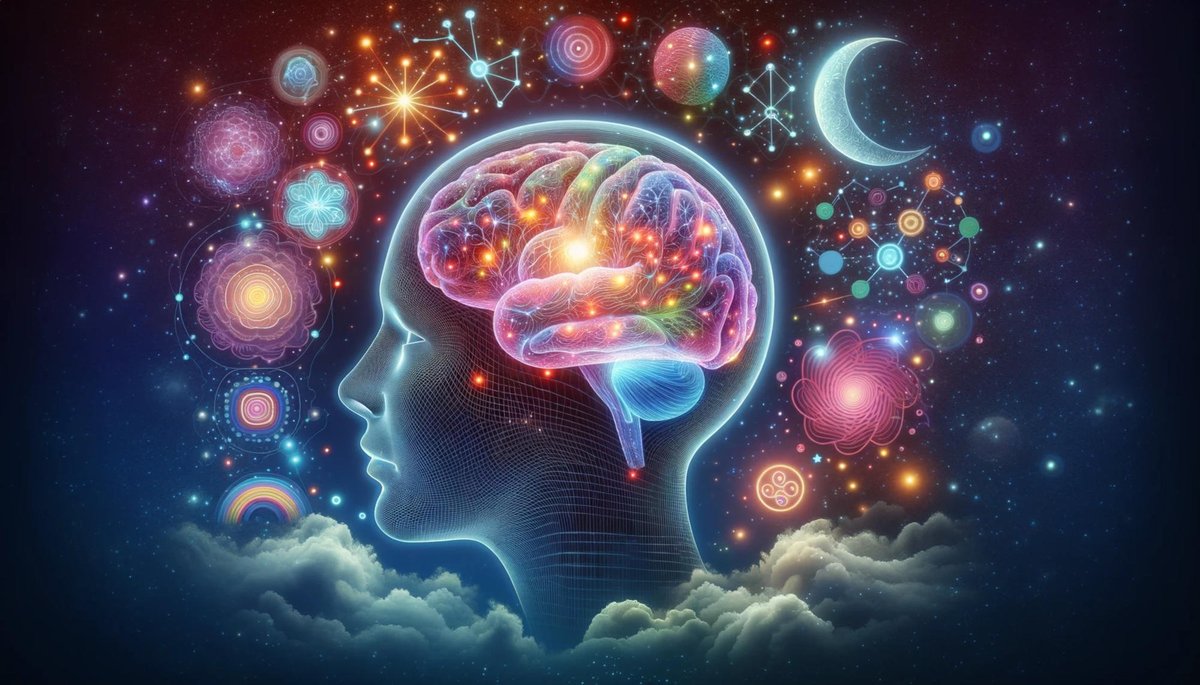
Ever wonder why you can fly in your dreams, or why your teeth suddenly fall out? Understanding how does dreaming work involves delving into the complex interplay of brain regions, neurochemicals, and the stories our minds weave while we sleep. It's a journey into the fascinating world of sleep neuroscience.
At a glance:
- Understand the major theories attempting to explain why we dream.
- Pinpoint the brain regions most active during dream states and their roles.
- Learn how sleep stages and neurotransmitters influence dream content.
- Grasp the difference between normal dreams, nightmares, and lucid dreams.
- Discover the connection between dreaming and memory consolidation.
- Identify common dream disorders and their impact on the dreaming experience.
The Big Question: Why Do We Dream At All?
Scientists haven't definitively cracked the code on why we dream, but several compelling theories offer different perspectives. Are dreams random firings of neurons, a way to process emotions, or something else entirely?
- Activation-Synthesis: This theory suggests dreams are essentially the brain's attempt to make sense of random electrical impulses firing during REM sleep. Think of it like your brain trying to write a coherent story from scrambled words.
- Threat Simulation: Dreams, especially nightmares, may act as simulations of threatening situations, allowing us to rehearse responses and better cope with real-life dangers. It's your brain's built-in survival training program.
- Emotion Regulation: This perspective posits that dreams help us process and regulate our emotions. By replaying emotional experiences in a safe, simulated environment, we can work through anxieties and traumas.
- Memory Consolidation: Dreaming could be a critical part of transferring information from short-term to long-term memory. Imagine your brain filing away important memories while you sleep, with dreams acting as a sort of indexing system.
Neuroscientist Sidarta Ribeiro, for example, champions the notion that dreams have meaning, arguing they're not merely arbitrary brain activity. Conversely, the activation-synthesis model views dreaming as a byproduct of brainstem activation, followed by the cortex concocting a visual narrative. Understanding these diverse viewpoints is key when asking, "how does dreaming work?"
The Sleep Cycle Blueprint: Stages and Their Dream Impact
Sleep isn't a uniform state; it's a cycle of distinct stages that profoundly impact our dreaming experience.
- NREM (Non-Rapid Eye Movement) Sleep: This phase includes three stages (N1, N2, N3), gradually deepening from light sleep to slow-wave sleep. Dreams can occur during NREM, but they're typically less vivid and more thought-like than REM dreams.
- REM (Rapid Eye Movement) Sleep: The stage most associated with vivid, narrative dreams. During REM, our brains are highly active, resembling wakefulness in many ways – except our bodies are paralyzed (REM atonia), preventing us from acting out our dreams. Early REM periods last only a few minutes, but they lengthen as the night progresses, sometimes extending to an hour or more in the early morning.
These stages cycle roughly every 90 minutes, orchestrated by intricate interplay of brain regions and neurotransmitters. To understand how does dreaming work, you need to grasp this underlying architecture.
Practical Tip: Pay attention to when you typically have your most vivid dreams. Are they usually in the early morning? This likely means you're experiencing longer REM cycles later in your sleep period.
Brain Activity Unveiled: Where the Magic Happens
Specific brain regions become highly active (or inactive) during dreaming, shaping the content and intensity of our dream experiences.
- Limbic System (Amygdala and Hippocampus): This area, crucial for emotion and memory, flares with activity during dreams. The amygdala drives the strong emotional content of many dreams, while the hippocampus incorporates fragments of recent experiences ("day residue").
- Visual Cortex: The brain's visual processing center generates the vivid imagery we see in dreams. This explains why dreams are often so visually rich, even though our eyes are closed.
- Prefrontal Cortex: The area responsible for logic, reasoning, and self-awareness, goes mostly offline during dreaming. This explains why we often accept bizarre or impossible scenarios in our dreams without question.
- Brainstem: During REM sleep, the brainstem disables the spinal cord, causing temporary paralysis (REM atonia). This prevents us from acting out our dreams and potentially injuring ourselves.
These areas interact to create the immersive, often illogical, and emotionally charged experience we call dreaming. The architecture helps illuminate how does dreaming work.
Dream Content: Mixing Memory, Emotion, and Imagination
Dreams rarely replay events exactly as they happened. Instead, they distort, remix, and reframe experiences to consolidate memories and emotions. The hippocampus plays a major role, incorporating fragments of recent experiences ("day residue").
- Memory Integration: Dreams help integrate new memories with existing knowledge, creating a more cohesive understanding of the world.
- Emotional Processing: Dreams allow us to confront and process difficult emotions in a safe, simulated environment.
- Creative Problem-Solving: The lack of logical constraints in dreams can sometimes lead to creative breakthroughs or novel solutions to problems.
Case Snippet: A student struggling with a complex math problem dreamt that numbers were dancing and rearranging themselves. Upon waking, they had a new insight that helped them solve the problem.
Nightmares and Lucid Dreams: The Extremes of the Spectrum
Not all dreams bring pleasant experiences; some can be terrifying. Conversely, some dreams offer a sense of control.
- Nightmares: Intense, emotionally charged dreams often involving danger, fear, or loss. They're associated with hyperactivation of the amygdala and a failure of prefrontal cortex regulation. The "threat simulation theory" suggests nightmares simulate threatening situations, providing emotional adaptation.
- Lucid Dreaming: Awareness that one is dreaming within the dream. The prefrontal cortex becomes partially reactivated, allowing for some degree of conscious control over the dream narrative. Lucid dreaming can be used for exploration, creativity, problem-solving, and even therapy.
Actionable Advice: If you experience frequent nightmares, consider practicing relaxation techniques or seeking professional help to address underlying anxieties. If you're interested in lucid dreaming, there are various techniques you can try, such as reality testing and dream journaling.
Dreaming and Memory: An Intertwined Relationship
Dreaming plays a crucial role in sorting, storing, and strengthening memories. NREM sleep consolidates factual and procedural memories (like riding a bike), while REM sleep specializes in emotional and associative memory. Dreams, therefore, are a vital component to learning and growth.
Practical Example: Imagine learning a new language. NREM sleep might help consolidate vocabulary and grammar rules, while REM sleep helps you associate those words with emotions and real-life situations.
If you want more background, Explore the Science of Dreams to understand the fundamental connection between dreaming, memory, and brain function.
Dream Disorders: When Dreams Disrupt Sleep
Dream disorders can significantly impact sleep quality and overall well-being.
- Parasomnias: These include sleepwalking, night terrors, and REM sleep behavior disorder (RBD).
- REM Sleep Behavior Disorder (RBD): In RBD, the paralysis that normally occurs during REM sleep breaks down, causing individuals to act out their dreams, sometimes violently.
- Narcolepsy: A neurological disorder characterized by excessive daytime sleepiness and sudden sleep attacks. Narcolepsy often features vivid dreams as the boundaries between REM and wakefulness blur.
Decision Tree: - Frequent nightmares or disturbing dreams? -> Consider stress management techniques or professional counseling.
- Acting out dreams physically? -> Consult a doctor; it could be a sign of RBD.
- Excessive daytime sleepiness with vivid dreams? -> See a sleep specialist to rule out narcolepsy.
Decoding Your Dreams: Practical Steps
While interpreting dreams is subjective, here are steps to help:
- Keep a Dream Journal: Record dreams as soon as you wake up, remembering details.
- Identify Recurring Themes: Watch for patterns or symbols that appear repeatedly.
- Reflect on Emotions: Consider the feelings evoked and their real-life counterparts.
- Consider Recent Events: How might "day residue" shape the narrative?
- Research Symbols: If a symbol is unclear, research its potential meanings.
Quick Answers: Dream FAQs
Q: Are dreams always symbolic?
A: Not always. Some dreams are literal reflections of recent experiences, while others are highly symbolic.
Q: Can you control your dreams?
A: Yes, through lucid dreaming techniques, some people can gain conscious control over their dreams.
Q: Do blind people dream?
A: Yes, but their dreams are often based on other senses like sound, touch, and smell.
Q: Are nightmares harmful?
A: Occasional nightmares are normal, but frequent or severe nightmares can disrupt sleep and may indicate underlying stress or trauma.
Q: Can dreams predict the future?
A: There's no scientific evidence to support this claim. Any perceived "predictions" are likely coincidences.
Start Understanding Your Dreams
Dreams offer a glimpse into the inner workings of your mind, reflecting your emotions, memories, and creative potential. By understanding the science behind dreams and paying attention to your own dream experiences, you can unlock valuable insights into yourself. The journey of understanding how does dreaming work is a long one, but it can result in a better understanding of oneself.